A Reusable Rocket - What is Starship?


On September 28, 2026, SpaceX’s Starship successfully reached Earth orbit for the first time after 13 previous test flights, marking a major milestone for the rocket. It is now the largest rocket in human history to ever make it into orbit. Its size, power, and reusability are all poised to change the way we travel to space.
What Makes Starship Different?
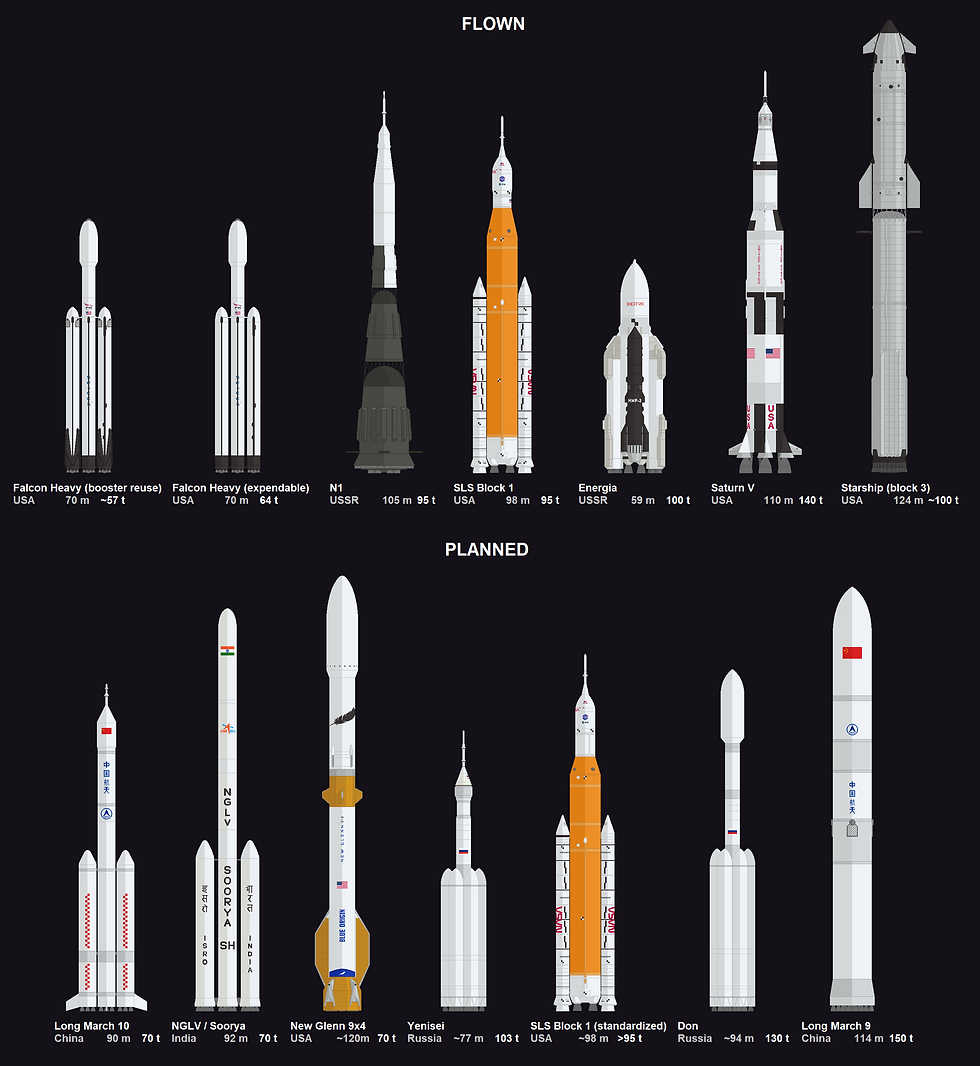
Starship is a two-stage launch vehicle that stands about 400 feet (120 meters) tall with a diameter of 30 feet (9 meters). In comparison, NASA’s Saturn V rocket, which carried the Apollo astronauts to the Moon and the previous record holder, was only 363 feet (111 meters) tall. Most other rockets are far shorter. This size is important, as Starship is designed to be a workhorse that can carry heavy payloads into space or make long interplanetary trips. The bigger the rocket, the more fuel it can carry and the more powerful its thrust. Starship’s liftoff thrust is twice as strong as the Space Launch System (SLS) rockets that NASA has employed for the Artemis Program and three times as powerful as SpaceX’s Falcon Heavy rocket.
Reduce, Reuse, Recycle
With all that size and fuel, it sounds like Starship should be far more expensive to operate than the others, but it’s actually far cheaper. Starship is positioned to be the first rocket to be 100% reusable. Traditionally, rockets have always been disposable. After one use they would be discarded, despite the massive price tags associated with them. The Space Shuttle was the first attempt at making a partially reusable rocket. While the Orbiter Vehicle and twin Solid Rocket Boosters could be reused, the External Tank could only be used once. Likewise, SpaceX’s own Falcon Heavy is partially reusable, with the boosters able to return safely to Earth for reuse, but the center core was often expended and the upper stage was always discarded.
A disposable Falcon Heavy launch costs $150 million, but a reusable launch cuts the price down to $90 million. For comparison, the launch of the Artemis II SLS, which is fully disposable, cost around $4 billion. Starship, on the other hand, is fully reusable. Every part of it can be used for multiple launches. All it needs is to be refueled, and fuel is relatively cheap compared to the hardware of a rocket. SpaceX hopes that the completely reusable hardware will bring the price per launch of Starship down to $10 million or less, a significant price decrease, even compared to the Falcon Heavy.
How It Happens
Starship accomplishes its reusability goals by having its first stage designed to land on Earth, rather than being jettisoned into the ocean. For max efficiency, rockets typically have multiple stages. The first stage of the rocket is essentially a fuel tank with engines of its own. It lifts the entire vehicle as high as possible, then separates so the following stage can take over. This jettisoning of the first stage means the second stage has less weight to carry and therefore requires less fuel.

Traditionally, the first stage would then fall back to Earth and crash land in the ocean, never to be used again. But Starship’s first stage, the Super Heavy Booster, has reserve fuel it can use to slow its descent back down to Earth. It will guide itself to the same tower it launched from, where it will be caught in midair by a set of mechanical arms. This catching system allows the rocket to save weight by removing heavy landing gear while also potentially allowing the rocket to be almost immediately ready to be connected to another upper stage for a second launch on the same day if necessary.
As for the upper stage, where the payload is situated, once it has made it into space and accomplished its mission, it will return to Earth in a sideways orientation. This position will limit its terminal velocity, keeping it from moving too fast as it falls. Once above its landing zone, it will fire its landing engines to further slow itself, reorient itself upright, and will also be caught midair by mechanical arms. Nothing is wasted in the process.
With its combination of reusability and power, Starship is positioned to make space launches cheaper and easier than ever. SpaceX even sees a possible future where Starship makes manned trips to both the Moon and Mars economically feasible for the long term. Monday’s successful test flight could be the start of a new era of space exploration.


Comments