A Home Above Home - The International Space Station


The International Space Station is a home above home for astronauts. The record-breaking space station has been permanently crewed for over a quarter-century and is a hub of science, essentially acting as a zero-gravity laboratory. But beyond that, the ISS is a symbol of international cooperation and unity.
From Rivals to Partners
At the tail end of the Space Race, following the United States’ Moon landing, the focus of space exploration was shifting towards long-term space habitation. The Soviet Union launched the first space station with Salyut 1 in 1971, which was followed by five more Salyut stations and later Mir in 1986. The United States answered with Skylab in 1973.
However, by the 1980s, the climate had begun to change. Initially, the US was planning to launch the Space Station Freedom as an answer to the Soviet Mir station. Both Europe and Japan were invited to launch their own modules to attach to Freedom. As the 1990s came, costs inflated, and the future of Freedom was uncertain. Simultaneously, the USSR was planning the successor to Mir, Mir-2, but the collapse of the Soviet Union all but doomed those plans.
With both space stations having begun construction, but under the threat of cancellation, America and Russia agreed it would be better to combine their efforts, rather than let both projects die. This was the birth of the International Space Station program. Canada was also invited to join the program, totaling 15 different nations represented by the five space programs partaking in the construction of the ISS.
The Largest Space Station
The ISS is modular, meaning that it is built in separate modules on Earth that can be launched into space one-by-one and connected in orbit. New modules can be added at any time to suit the current needs and further expand the station. The first of these modules was launched in 1998.

Today, the station is made up of 16 pressurized modules. It has a mass of 990,000 lbs (450,000 kg) and length from end to end of 358 feet (109 m), putting it about the length of a football field. It is the largest man-made structure in space. The station orbits over 250 miles (over 400 km) above the surface of Earth, at 17,100 mph (27,600 km/h). At that speed, it only takes the ISS an hour and a half to complete one orbit around the Earth (92.9 minutes, to be exact). The ISS has been described as the most expensive single object ever constructed, with a total cost of $150 billion.
ISS Operations
In 2000, the ISS was deemed ready for a crew. In November of that year, Expedition 1, a crew of three, began their 136-day long stay aboard the station, beginning an uninterrupted presence of humans in space that lasts to this very day. The ISS is continuously crewed by anywhere from 3 to 10 astronauts at a time, with 7 being the average. The average crew remains aboard for about 6 months. Before one crew leaves the station, another crew arrives to relieve them, keeping up a continuous chain of habitation that has lasted nearly 26 years. As of August 2025, over 290 individuals from 26 different countries have been aboard the ISS.
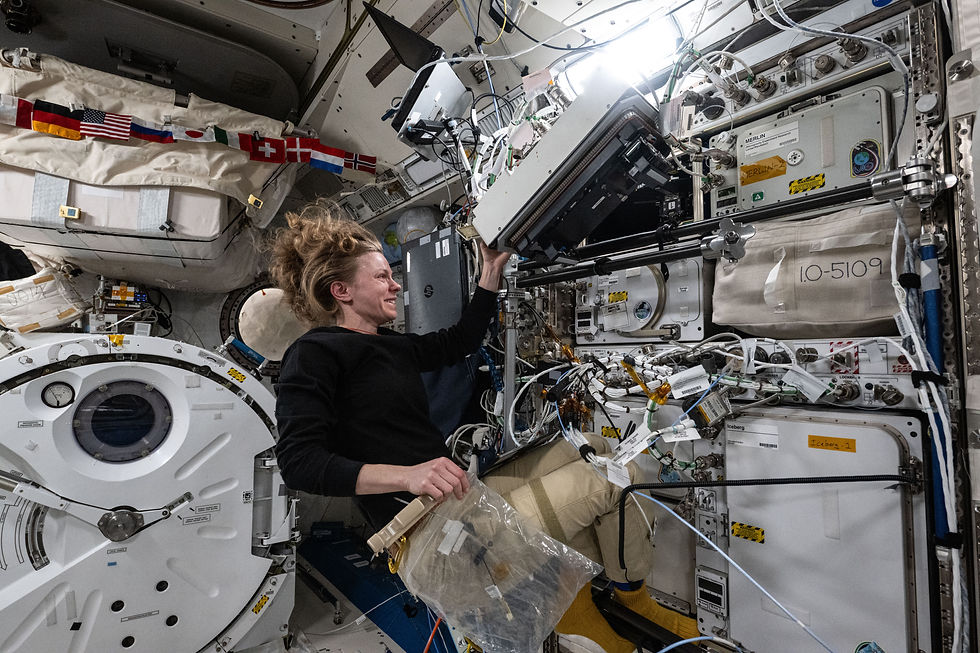
The ISS offers a unique opportunity to study a microgravity environment and how humans react to it. Knowing exactly how humans react to long-term stays in microgravity is important for planning the future of manned space exploration. The ISS also provides a lab environment in which we can test physics, chemistry, biology, and more, all without interference from gravity.
The Fate of the ISS
Originally, the ISS was only intended to last for 15 years, but it has performed so well that its mission is constantly being extended. However, as the station gets older, its parts grow less reliable and the danger to astronauts aboard becomes more present. As of early 2026, the ISS is planned to remain in operation until 2030, at which point it will undergo a controlled de-orbit, intentionally directing its re-entry over an uninhabited area of ocean. A controlled de-orbit would avoid the risk of an unexpected re-entry over a populated area as well as remove potential space debris from low-Earth orbit. However, an alternative plan to boost the station into a higher and safer orbit for potential future reuse is under consideration.
With five different space agencies constructing it, 15 different nations managing it, and 26 different nations sending representatives to live aboard it, there are few things that truly represent international cooperation and global unity better than the International Space Station. More than anything else, it is the definitive symbol of the modern space age.


Comments